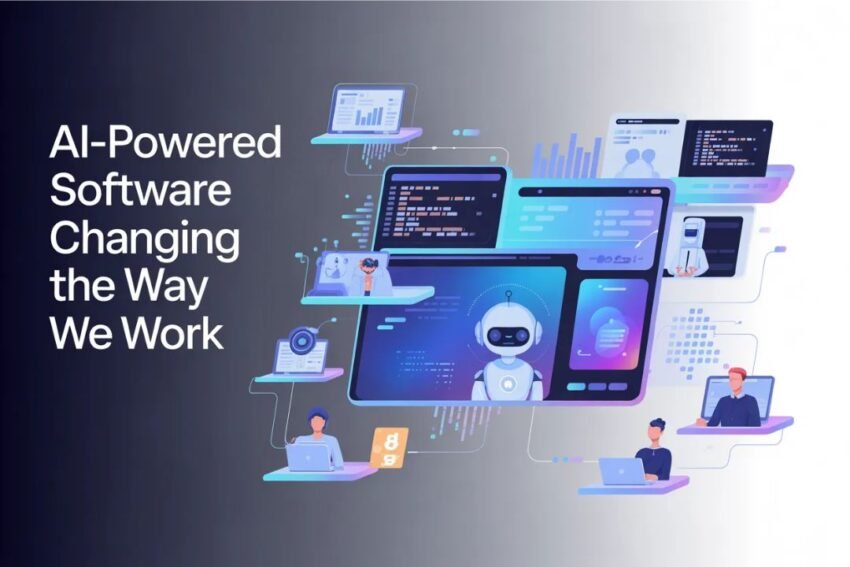
Artificial Intelligence (AI) is no longer a futuristic concept—it is already transforming the way we work. In 2026, AI-powered software has become an essential part of workplaces across the world. From automating repetitive tasks to helping with decision-making, AI is making work faster, smarter, and more efficient.
This article explores how AI-powered software is changing modern work environments and why it has become indispensable for businesses, freelancers, and professionals.
The Rise of AI in the Workplace
AI software uses machine learning, natural language processing, and data analytics to perform tasks that once required human effort. In 2026, AI tools are more accurate, user-friendly, and affordable. Companies of all sizes now rely on AI to improve productivity and reduce operational costs.
Instead of replacing humans, AI is helping people focus on creative and strategic work.
1. AI for Task Automation
One of the biggest benefits of AI software is automation. Repetitive and time-consuming tasks can now be handled automatically.
Examples:
- Data entry
- Email sorting
- Scheduling meetings
By automating routine work, employees can focus on higher-value tasks.
2. AI-Powered Productivity Tools
Modern productivity tools use AI to help users manage time and tasks efficiently.
Key Features:
- Smart task prioritization
- Deadline reminders
- Workflow optimization
AI analyzes work patterns and suggests ways to improve efficiency.
3. AI in Communication and Collaboration
AI has improved workplace communication significantly. Tools powered by AI can transcribe meetings, summarize discussions, and translate languages in real time.
Benefits:
- Better remote collaboration
- Faster information sharing
- Reduced misunderstandings
This is especially useful for global teams.
4. AI for Content Creation
Content creation has become faster with AI-powered writing and design tools.
Uses:
- Blog writing
- Social media content
- Marketing copy
AI tools help generate ideas, improve grammar, and optimize content for SEO.
5. AI in Data Analysis and Decision Making
AI software can analyze massive amounts of data in seconds and provide actionable insights.
Why It Matters:
- Better business decisions
- Accurate forecasting
- Reduced human error
AI helps companies stay competitive by making data-driven decisions.
6. AI-Powered Customer Support
AI chatbots and virtual assistants are now common in customer service.
Advantages:
- 24/7 availability
- Faster responses
- Consistent service
This improves customer satisfaction while reducing workload on human agents.
7. AI in Project Management
Project management tools now use AI to predict delays, allocate resources, and track performance.
Key Features:
- Smart timelines
- Risk prediction
- Automated reporting
This ensures projects stay on track.
8. AI for Remote and Hybrid Work
Remote work has become more efficient with AI software.
How AI Helps:
- Virtual assistants
- Performance tracking
- Smart scheduling
AI ensures productivity remains high, even outside traditional offices.
9. AI in Human Resources
AI has transformed HR processes such as recruitment and employee management.
Applications:
- Resume screening
- Candidate matching
- Performance evaluation
This saves time and improves hiring accuracy.
10. AI-Powered Learning and Skill Development
AI helps professionals upskill by offering personalized learning recommendations.
Benefits:
- Customized courses
- Skill gap analysis
- Career growth support
This helps workers stay relevant in a changing job market.
Challenges of AI-Powered Software
Despite its benefits, AI also presents challenges such as data privacy, ethical concerns, and job displacement fears. Organizations must use AI responsibly and ensure transparency.
The Future of Work with AI
In the coming years, AI will become even more integrated into daily work. Human-AI collaboration will define success, with AI handling routine tasks and humans focusing on creativity, leadership, and innovation.
Conclusion
AI-powered software is changing the way we work by improving efficiency, accuracy, and collaboration. From automation and communication to decision-making and learning, AI is reshaping workplaces for the better. Embracing AI today means being prepared for the future of work.