Introduction
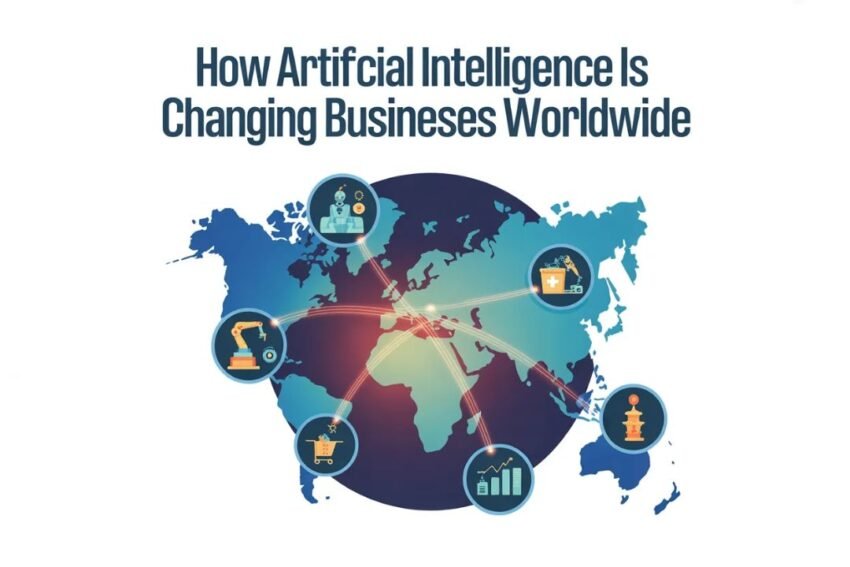
Artificial Intelligence (AI) is no longer just a futuristic concept—it has become a powerful force that is transforming businesses around the world. From small startups to global enterprises, organizations are using AI to improve efficiency, reduce costs, enhance customer experience, and make smarter decisions.
In today’s fast-paced digital economy, businesses that adopt artificial intelligence gain a strong competitive advantage, while those that ignore it risk falling behind. This article explains how AI is changing businesses worldwide, its key applications, benefits, challenges, and what the future holds.
What Is Artificial Intelligence in Business?
In a business context, artificial intelligence refers to the use of machines and software that can:
- Analyze large amounts of data
- Learn from patterns and past behavior
- Automate tasks
- Make predictions and decisions
AI systems help businesses move beyond traditional rule-based systems and towards data-driven, intelligent operations.
Why Businesses Are Adopting AI
Businesses worldwide are adopting AI for several key reasons:
- Massive growth in data availability
- Faster and cheaper computing power
- Demand for personalization
- Need for automation and efficiency
- Increasing competition in global markets
AI enables companies to work smarter, not harder.
Key Areas Where AI Is Transforming Businesses
1. Automation and Operational Efficiency
One of the biggest impacts of AI is automation. AI-powered systems can handle repetitive and time-consuming tasks with high accuracy.
Examples:
- Automated data entry
- Invoice processing
- Inventory management
- Supply chain optimization
By automating routine tasks, businesses reduce human error, save time, and allow employees to focus on higher-value work.
2. Customer Service and Support
AI has completely changed how businesses interact with customers.
AI Chatbots and Virtual Assistants
Chatbots provide:
- 24/7 customer support
- Instant responses
- Reduced support costs
They can answer common questions, process orders, and guide users without human intervention.
Personalized Customer Experience
AI analyzes customer behavior and preferences to deliver:
- Personalized product recommendations
- Targeted promotions
- Customized content
This improves customer satisfaction and loyalty.
3. Marketing and Sales Transformation
AI plays a major role in modern marketing strategies.
Data-Driven Marketing
AI tools analyze customer data to:
- Predict buying behavior
- Segment audiences
- Optimize ad campaigns
Sales Forecasting
AI helps sales teams:
- Predict demand
- Identify high-value leads
- Improve pricing strategies
As a result, businesses achieve higher conversion rates and better return on investment (ROI).
4. Decision-Making and Business Intelligence
AI enables smarter and faster decision-making by analyzing massive datasets in real time.
Benefits include:
- Accurate predictions
- Risk assessment
- Market trend analysis
Executives use AI-powered dashboards and analytics tools to make informed strategic decisions backed by data instead of guesswork.
5. Human Resources and Talent Management
AI is also changing how companies manage their workforce.
Recruitment
AI tools can:
- Screen resumes
- Identify the best candidates
- Reduce hiring bias
Employee Performance
AI helps analyze:
- Productivity patterns
- Training needs
- Employee engagement
This leads to better hiring decisions and a more motivated workforce.
6. Finance and Accounting
In finance, AI improves accuracy, security, and efficiency.
Applications include:
- Fraud detection
- Credit scoring
- Expense management
- Automated financial reporting
Banks and businesses use AI to detect unusual transactions and prevent financial fraud in real time.
7. Supply Chain and Logistics
AI optimizes supply chain operations by:
- Predicting demand
- Managing inventory levels
- Optimizing delivery routes
This reduces costs, prevents shortages, and improves delivery times—especially for global businesses.
8. Product Development and Innovation
AI accelerates innovation by helping companies:
- Analyze customer feedback
- Simulate product designs
- Predict product success
In industries like manufacturing, healthcare, and technology, AI shortens development cycles and improves product quality.
Benefits of AI for Businesses
Artificial intelligence provides several major advantages:
✔ Increased productivity
✔ Reduced operational costs
✔ Improved accuracy and efficiency
✔ Better customer insights
✔ Scalability and growth
AI enables businesses to grow faster while maintaining quality and consistency.
Challenges Businesses Face with AI
Despite its benefits, AI adoption comes with challenges.
1. High Initial Costs
Implementing AI systems requires investment in:
- Technology
- Infrastructure
- Skilled professionals
2. Data Privacy and Security
AI relies heavily on data, raising concerns about:
- Customer privacy
- Data misuse
- Compliance with regulations
3. Lack of Skilled Workforce
There is a global shortage of AI and data science experts, making adoption difficult for some businesses.
4. Ethical and Bias Issues
If AI systems are trained on biased data, they can produce unfair or inaccurate results.
AI and the Future of Work
AI is not replacing humans—it is changing the nature of work.
- Routine tasks will be automated
- New jobs will emerge
- Employees will focus more on creativity, strategy, and problem-solving
Businesses that invest in reskilling and upskilling their workforce will benefit the most.
Global Impact of AI on Businesses
Around the world, AI is:
- Helping startups scale faster
- Enabling small businesses to compete globally
- Transforming traditional industries
- Driving digital transformation
Countries and companies that embrace AI are becoming leaders in innovation and economic growth.
The Future of AI in Business
In the coming years, AI will become even more integrated into business operations.
Expected trends include:
- AI-powered decision automation
- Hyper-personalization for customers
- Smarter virtual assistants
- Ethical and regulated AI systems
AI will not just support businesses—it will become a core part of business strategy.
Conclusion
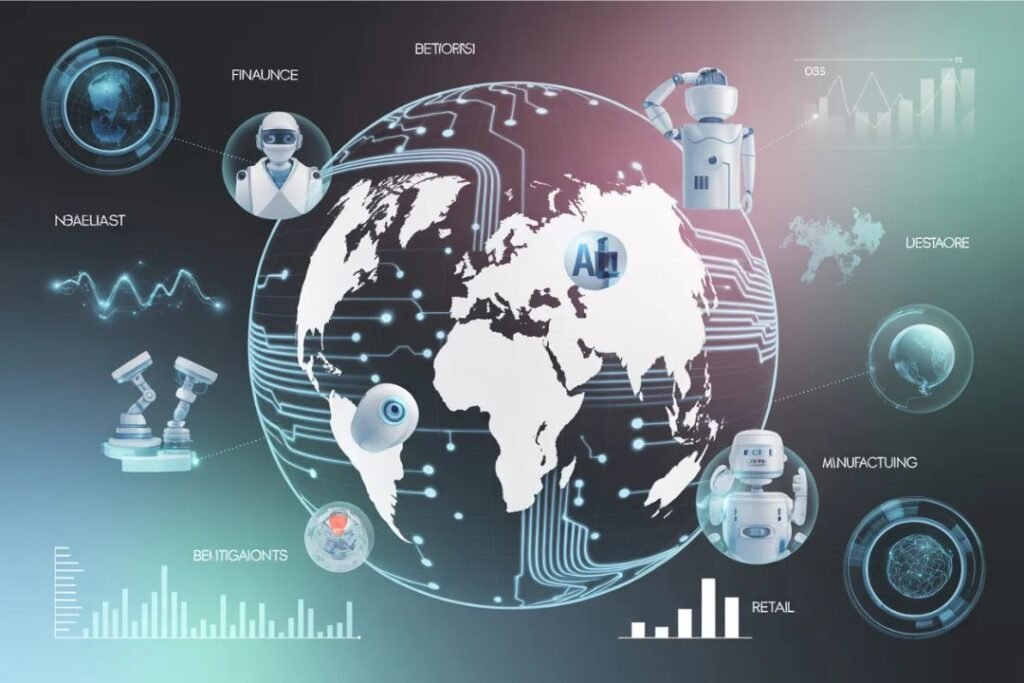
Artificial Intelligence is reshaping businesses worldwide by improving efficiency, enhancing customer experiences, and enabling smarter decisions. From automation and marketing to finance and innovation, AI is transforming every aspect of modern business.
Companies that adopt AI responsibly and strategically will gain a powerful advantage in the global market. As technology continues to evolve, artificial intelligence will remain one of the most important drivers of business success in the digital age.